
Does the year on a wine label matter?
30 October 2026
For most bottles under KSh 3,000, the year on the label tells you how old the wine is, not how good it is. An older year can sound like a wine that has aged into something better, and a bottle marked NV, with no year at all, can look second-rate. With everyday wine it’s usually the other way round: whites and rosés are best young, and the best-known Champagnes have no year on purpose.
What the year promises
A year on the label means at least 85% of the grapes were picked in that harvest. That’s the rule in the EU (Regulation 2019/33), in South Africa (Liquor Products Act) and in the US. NV, non-vintage, isn’t defined anywhere: it just means the wine is a blend of more than one year.
When it matters, and when it doesn’t
The year matters most for fine wine from places where the weather swings from one summer to the next. In Bordeaux the great years follow a warm, dry summer and a wet winter, and the difference shows in the price: at auction in 1990–91, a dozen bottles of Château Lafite 1961 fetched $4,335, and a dozen of the 1965 $190 (Ashenfelter, Ashmore and LaLonde, 1995).
Everyday wine is made differently. It’s usually blended from several vineyards, which evens out the differences (WSET), and it’s made to be drunk soon. For a bottle under KSh 3,000, the useful question isn’t whether it was a good year but whether it’s still young enough.
Buy whites and rosés young
Many whites are best within a year or two of bottling, and so are most rosés, though many rosés are still fine at three to five years (Wine Spectator). Of the 133 whites and rosés under KSh 3,000 that name their year online, 58 are from 2023 or earlier, three years old or more, and a few go back to 2017. Look at the label before you pay.
Heat ages a bottle too. Keep wine at 10 to 16°C: above 24°C most wines age fast and oddly, and it should never reach 30°C, even briefly (Purdue University). In Nairobi that mostly means not leaving a bottle in the car.
No year, on purpose
Champagne houses blend several harvests, some with up to half older reserve wine, so their Brut tastes the same every year. They make a vintage Champagne only in years they judge exceptional, and it has to age at least three years, against 15 months for non-vintage.

No year on the label, and none needed: it’s blended to taste the same every time you buy it.
Non-vintage Brut made up 76.5% of the Champagne exported in 2021, and vintage Champagne 1.4% (Comité Champagne figures, via Global Drinks Intel).
On a Prosecco, the word to look for is Millesimato. It means vintage: at least 85% of the wine is from the year on the label (Prosecco DOC rules).
Millesimato Prosecco in Nairobi
- Better valueTenuta San Giorgio Ripe in Rosa Prosecco Rosé MillesimatoBubbles · Italy · GleraKSh 2,6502 shops4.0Vivino
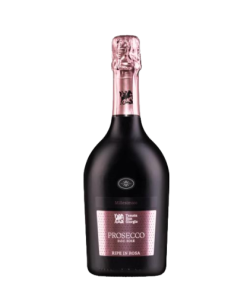
Prosecco · rated by 96 people on Vivino
- Better valueTenuta San Giorgio Ripe Frondose Prosecco MillesimatoBubbles · Italy · GleraKSh 2,6502 shops3.9Vivino

Prosecco di Treviso · rated by 226 people on Vivino


Finding the year
The Wine Box and Solovino name the year on most of their bottles online. Elsewhere it’s usually left out, which doesn’t mean the wine is NV, so look at the bottle or ask before you buy. Vivino’s score won’t help with this: it covers every year of a wine at once.